PV Inverter Burn In Chamber Test System

Power Supply Burn In Chamber
January 21, 2026
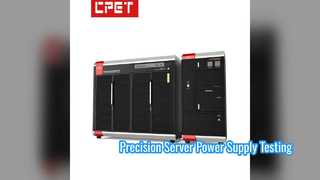
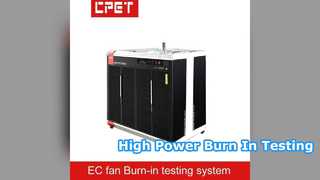
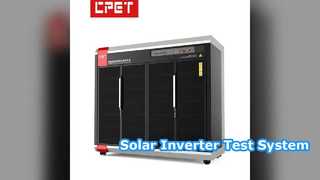
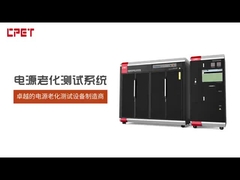
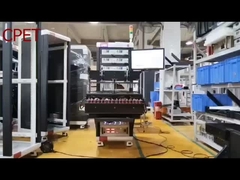
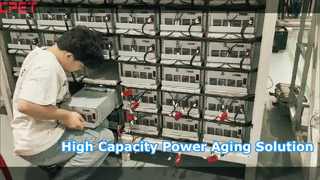
Brief: Need quick answers about practical use? This video highlights the essentials. Watch a detailed walkthrough of the PV Inverter Burn In Chamber Test System, showcasing how it validates reliability and performance for large photovoltaic inverters. You'll see the system's operation, including software-controlled load parameter monitoring, the energy recovery module configuration, and the mobile cabinet structure designed for testing 40 inverters simultaneously.
Related Product Features:
  • Software-controlled load parameter settings with real-time monitoring of voltage, current, and power parameters.
  • CP load mode operation and programmable switch timing with load transformation functions.
  • Integration with power burn-in monitoring software for comprehensive test management.
  • Multiple DC conversion board interfaces to accommodate various inverter output requirements.
  • Mobile burn-in split cabinet design with 5-layer trolley structure for 40 inverters.
  • Energy recovery modules with RS485 communication and photoelectric isolation for safety.
  • Epoxy insulation boards with heat dissipation holes for layer insulation and anti-static protection.
  • Safety protections include equipment grounding, leakage switch, and smoke alarm auto power-off.
FAQs:
  • How many inverters can the burn-in chamber test simultaneously?
    The system is designed to test 40 inverters simultaneously, with 8 burn-in positions per layer across 5 trolley layers in a single cabinet.
  • What safety features are included in the burn-in chamber?
    The chamber includes multiple safety protections: equipment grounding protection, leakage switch protection, and smoke alarm automatic power-off protection to ensure operational safety.
  • How is the energy recovery module controlled and what are its key features?
    The energy recovery module uses RS485 communication mode, with the upper computer using RS232. It features photoelectric isolation for electronic load channels and a long-life, relay-free design architecture.
  • What are the electrical specifications for the inverter inputs and outputs?
    Each inverter position supports DC inputs of 10-60V/25A and AC outputs of 85-260V/30A/2.4W, accommodating various inverter requirements.