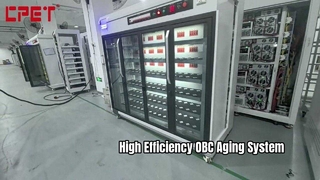
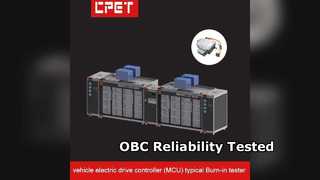
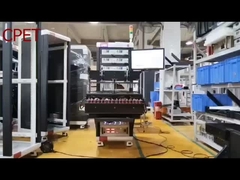
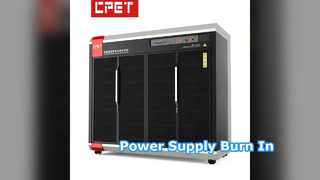
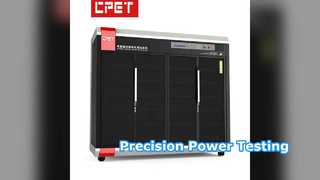
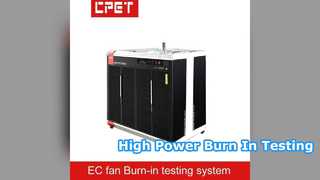
Brief: We tested it—see the highlights and what to expect in real operation. This video provides a detailed walkthrough of the Motor Control Unit Burn-In Test Equipment, showcasing its robust system structure and performance under demanding conditions. You'll see how it handles high-power testing up to 20kW per bit across a 150-1000Vdc range, ensuring reliability for automotive electronics.
Related Product Features:
Comprehensive system includes one control cabinet, two aging cabinets, and one water temperature cabinet for complete testing.
High-power testing capability supports up to 20kW per bit with a voltage range of 150-1000Vdc.
Advanced monitoring software displays real-time data like input voltage, current, and power with high precision.
Supports multiple load types including inductive, motor, and AC feedback loads for versatile applications.
Integrated safety features comply with IEC62368 standards and include over-current and over-temperature protection.
Efficient cooling systems with air and water options maintain stable temperatures from room temperature+5°C to 60°C.
MES docking capability and CSV report formats streamline data management and yield analysis.
Robust construction with materials meeting UL 94V0 rating and environmental standards like Rohs and WEEE.
FAQs:
What is the voltage range for the burn-in product input?
The burn-in product input voltage range is 150-1000Vdc, accommodating a wide spectrum of motor controller testing requirements.
How many bits can be tested per cabinet and what is the power per bit?
Each aging cabinet supports 16 bits, with each bit capable of handling up to 20kW of power for high-throughput testing.
What safety standards does the equipment comply with?
The equipment is designed to comply with the IEC62368 international safety standard and uses materials that meet UL 94V0 fire protection and Rohs/WEEE environmental requirements.
What types of loads can this test equipment handle?
It supports inductive, motor, and AC feedback loads, with specific current ratings of 350A for inductor/motor loads and 40A for AC feedback loads.